

Solar power systems are designed to generate and store electricity efficiently, but safety is just as important as energy production. Whether a system includes rooftop panels, batteries, an inverter or a backup power source, every component needs appropriate electrical protection.
One of the most important protective devices in an electrical system is the circuit breaker. Understanding circuit breaker basics can help homeowners and solar enthusiasts better understand how electrical systems are protected and why properly selected breakers matter.
What Is a Circuit Breaker?
A circuit breaker is an electrical safety device designed to interrupt the flow of electricity when a circuit experiences an unsafe condition.
Electrical wiring is designed to handle a specific amount of current. If too much current flows through the wiring for too long, it can generate excessive heat and potentially damage insulation or create a fire hazard.
A breaker helps prevent this by opening the circuit when it detects certain fault conditions. Unlike a traditional fuse, which normally has to be replaced after it operates, many circuit breakers can be reset after the underlying problem has been addressed.
What Causes a Circuit Breaker to Trip?
There are several situations that can cause a breaker to trip, but two of the most common are overloads and short circuits.
Overloads
An overload occurs when a circuit carries more current than it is designed to handle.
For example, connecting multiple high-power devices to the same circuit can gradually increase the electrical load. A thermal breaker responds to this sustained increase in current by heating a bimetallic element until the breaker mechanism opens.
This helps prevent electrical wiring from becoming dangerously hot.
Short Circuits
A short circuit is a much more sudden fault. It can occur when electricity finds an unintended low-resistance path, causing current to increase rapidly.
Magnetic protection inside many breakers responds to this sudden current spike and quickly opens the circuit.
The exact protection provided depends on the breaker type and the electrical system in which it is installed.
Why Circuit Breakers Matter in Solar Systems
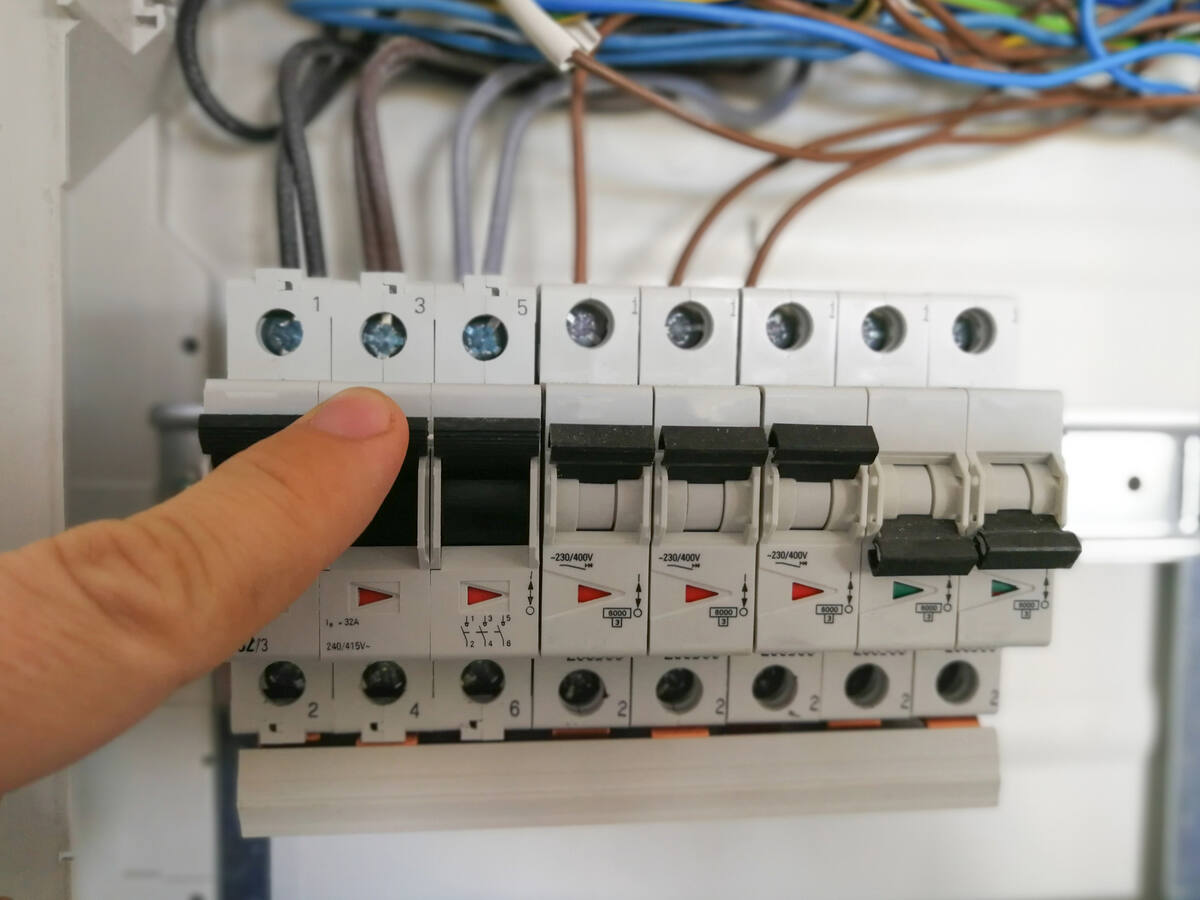
Solar installations have some characteristics that make electrical protection particularly important.
Solar panels produce DC electricity. Depending on the system design, that electricity may travel through charge controllers, battery storage, disconnects and inverters before being used by household appliances.
A typical system can therefore contain several sections that require appropriate protection and isolation. This is where circuit breakers for solar power systems become important. Breakers and disconnect devices can help isolate parts of the system during maintenance and provide protection against certain electrical faults.
Where Are Breakers Used in a Solar Installation?
The exact configuration depends on the system design, but protection may be required in several locations.
Between Solar Panels and Other Equipment
Solar panels produce DC power, so appropriate DC-rated protection and disconnect equipment may be used to isolate the photovoltaic array from the rest of the system.
A properly rated disconnect can be especially useful when technicians need to perform installation, inspection or maintenance.
Around Battery Systems
Battery banks can deliver substantial amounts of current. Appropriate overcurrent protection helps protect wiring and connected equipment if an electrical fault occurs.
The breaker or fuse must be selected according to the characteristics of the battery system, conductors and connected equipment.
Near the Inverter
The inverter is responsible for converting electricity between DC and AC in many solar installations.
Depending on the system configuration, protective devices may be installed on the DC side, AC side or both. The appropriate equipment depends on the inverter specifications and the overall electrical design.
Breaker Rating Matters
Installing a breaker is not simply a matter of choosing the largest available rating. The breaker needs to be compatible with the circuit, conductors, equipment and expected electrical load.
A basic electrical calculation starts with the relationship between power, voltage and current:
Current (A) = Power (W) ÷ Voltage (V)
For example, a 1,200-watt load operating at 12 volts would theoretically draw:
1,200 ÷ 12 = 100 amps
However, real-world system design involves additional considerations, including continuous loads, conductor ampacity, equipment specifications, temperature and applicable electrical codes.
For this reason, breaker sizing should not be based on a simple calculation alone.
Why the Wire and Breaker Must Work Together
A common mistake is to focus only on the breaker rating. The wiring is equally important.
A breaker is intended to interrupt excessive current before the conductors become dangerously overheated. If a breaker is improperly oversized for the wiring, the conductor may be exposed to more current than it can safely handle before the breaker trips.
Therefore, the conductor’s ampacity, breaker rating, equipment requirements and installation conditions all need to be considered together.
AC and DC Breakers Are Not Always Interchangeable
Another important consideration for solar installations is the difference between AC and DC electrical systems.
DC electricity behaves differently from AC electricity when a circuit is interrupted. Because of this, equipment designed for one type of current should not automatically be assumed to be suitable for the other.
Solar systems frequently involve both. For example, electricity generated by photovoltaic panels is DC, while many household circuits operate on AC after electricity passes through an inverter.
Always use protective equipment that is specifically rated for the application.
Breakers Are Not the Only Safety Devices
Circuit breakers are important, but they are only one part of a complete electrical protection strategy. Depending on the installation, a system may also use disconnects, fuses, ground-fault protection, arc-fault protection, surge protection, grounding and bonding equipment, and other safety components.
Each serves a particular purpose. A standard breaker primarily provides overcurrent protection. Specialized devices can provide additional protection against conditions that a standard breaker may not detect.
When Should You Have a Professional Check the System?
Solar electrical systems can involve high voltages and substantial current. Incorrect wiring, unsuitable protective equipment or improper breaker sizing can create serious safety risks.
If you are installing or modifying a solar panel system, consult the manufacturer’s instructions and applicable electrical codes. For work involving your home’s electrical system, using a qualified electrician or appropriately licensed professional can help ensure the installation is safe and compliant.
This is especially important when connecting solar equipment to a home’s main electrical panel or integrating battery storage with existing circuits.
The Bottom Line
Circuit breakers may be small components compared with solar panels, batteries, and inverters, but they play an important role in electrical safety.
Understanding how breakers respond to overloads and short circuits provides a useful foundation for anyone learning about solar electricity. For actual installations, however, selecting the correct breaker requires more than knowing its amp rating. The electrical load, wiring, equipment specifications, system voltage, breaker type and local requirements all need to be considered.
A properly designed protection system helps ensure that a solar installation is not only capable of producing and storing energy, but is also designed with electrical safety in mind.


