

When most people think of gardening, they think of outdoor plants, which is fair. However, the simple reality is that having just a few plants indoors can really brighten things up. What we want to do today is take a closer look at how to bring nature inside with the right houseplants. As you might be able to tell, one of our main focuses for today is going to be actually choosing the right house plants for your home, so let’s get to it and figure out how to do that.
Understand Your Home
Before you can start bringing your plants indoors, you need to be aware of what the indoor conditions of your house are like. The reason for this is because different plants have different requirements as far as temperature, humidity, and lighting are concerned.
For instance, you need to understand how much light is present in each room, because natural light levels can differ from one room to another.
For instance, the best windows to put plants in our south facing, which is ideal for cacti and succulents. You then have east or west facing windows which are moderate in terms of light amounts, and you have north facing windows, which generally don’t get that much light.
You then also need to take temperature and humidity into account. The reason for this is because the vast majority of plants that we put in houses come from tropical climates. This means that your houseplants are likely accustomed to humid and warm conditions.
If this is the case, you’ll need to use some kind of humidifier during the winter time, as this is when houses tend to get relatively dry. There are however also plants that need less humidity, such as succulents.
How to Choose the Right Houseplants
What we want to do now is to help you choose the right house plants for your indoor environment. We already mentioned that you need to pay attention to light, humidity, and temperature, so we won’t repeat ourselves, but you do need to take those into account nonetheless. However, there are also other factors to consider.
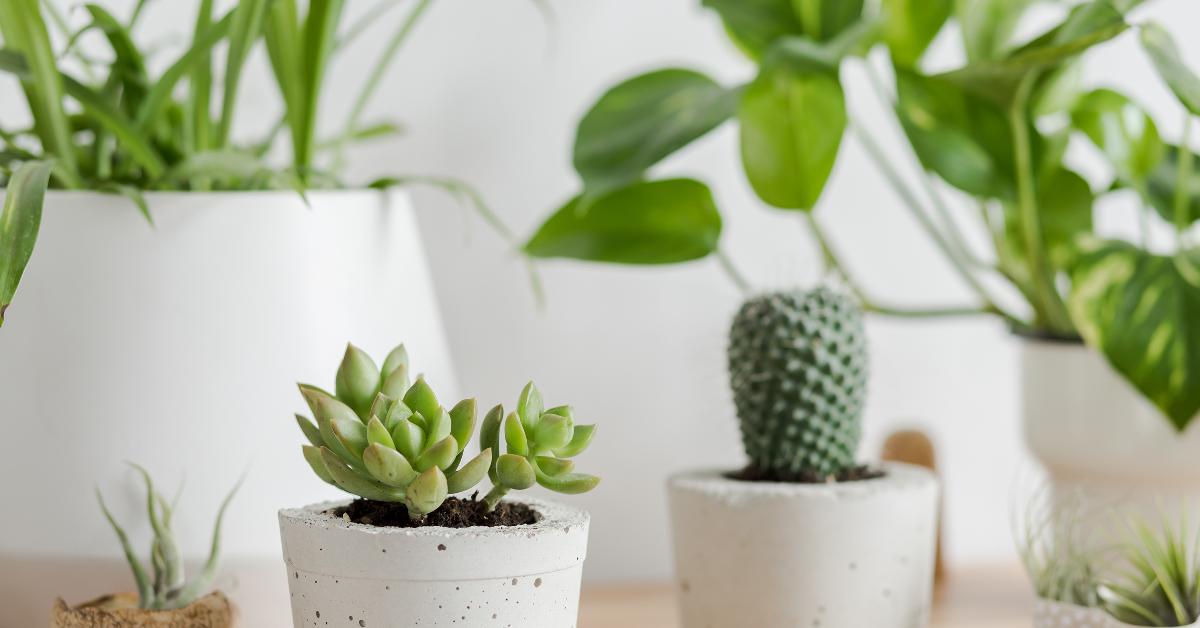
First and foremost, you’ll probably want to go with low maintenance plants. There are plenty of cacti and succulents that barely need any attention at all, and are also extremely forgiving. If you’re busy a lot and not home often, then plants that don’t require a lot of maintenance are recommended.
When choosing the right house plants, you could also consider wellness and health. According to NASA’s Clean Air Study, many different plants like Boston ferns, peace lilies, and spider plants are excellent at removing toxins such as benzene and formaldehyde from the air, and therefore work to purify your home.
The next thing you’ll want to consider here when choosing the right houseplants is the growth rate and overall size of the plant in question. Maybe you have a small home and don’t want to engage in much maintenance, or maybe you have a large home and don’t mind if the plants grow really quickly. Large indoor plants can definitely add to the decorum of any home.
Whatever the case may be, you have to match the growth rate and size of the plant to your home and to your needs. Of course, looking for the right color and shape of plants is recommended as well, because it’s always nice when your indoor houseplants match your overall decor.
How to Place Plants Indoors
Now that you know what some of the most important factors to look out for are when choosing indoor house plants, it’s a good idea to learn how to place those plants. Many of us have trouble placing houseplants indoors because we just don’t know where to put them. Well, here we have some good tips and strategies for you to follow on this front.
One of the strategies you could follow to place houseplants is to engage in what is known as spatial planning. This is when you try to soften hard lines or fill empty corners in your home. Furthermore, if you have a really small home or just a small space, building vertically by using planters mounted on the wall, or by using tall and narrow plants is a good idea.
You should also think about function, because plants in some cases can serve practical purposes. For instance, if you have big plants, such as tall ferns or bamboo, these could act as privacy screens or room dividers.
Another option you have at your disposal is to make some creative displays. There are plenty of terrariums and other such structures that you can create indoors to showcase a small indoor natural environment. If you don’t have much space to save, and also want to get creative with the plants you put indoors, a hanging planter is another option.
How to Care for Indoor Houseplants
Before we provide you with some examples of what the actual best indoor houseplants are, let’s go through a quick list of tips for you to follow to help you take care of them as best as possible.
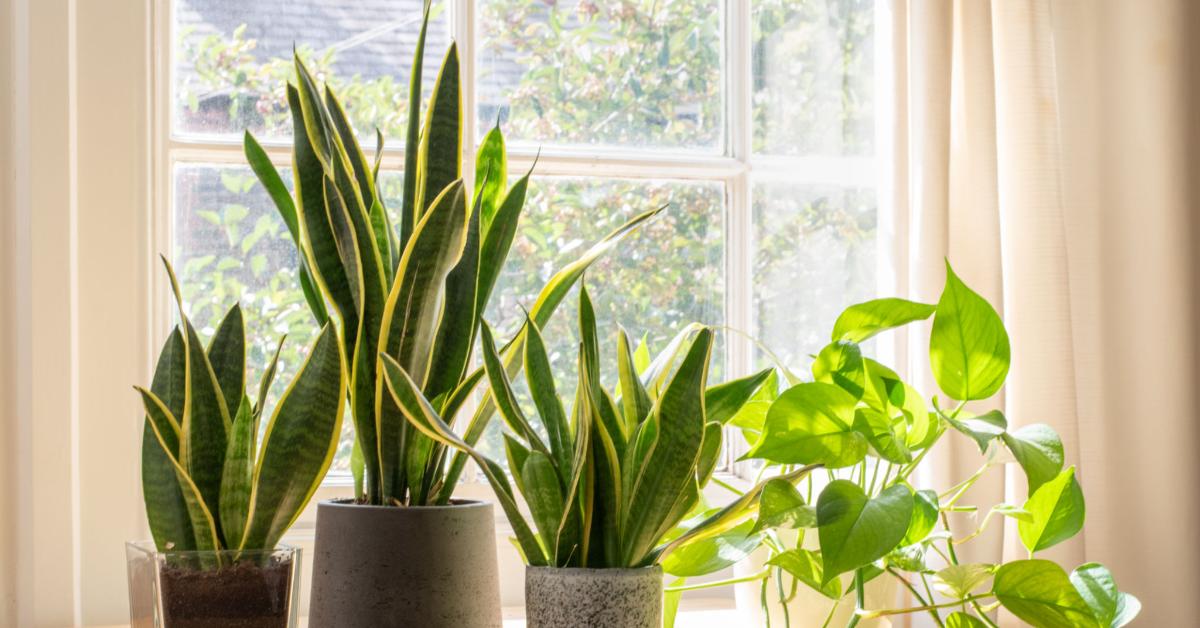
- Make sure to position your houseplants according to their lighting needs. Plants that need a lot of light should be placed in windows facing south, and plants that don’t need much light can go in west, east, or even north facing windows.
- Make sure that you don’t underwater or overwater your houseplants. A good rule of thumb here is to stick your finger in the top inch of soil, and if it’s dry, you can water. However, keep in mind that this depends on the type of plant. For instance, with cacti, you might want to check the first two inches of soil, as you don’t want to over water them.
- Realize that most houseplants prefer the temperatures to be anywhere between 65° and 75°F, and just a bit cooler during the night. For this reason, you don’t want to place plants near radiators, any drafty areas, or vents.
- It’s also essential that you provide your houseplants with the right kind of soil and fertilizer, particularly some high-quality compost. Realize that the soil that your houseplants are planted in doesn’t have unlimited nutrients, so you will have to supplement.
- Regularly inspect your house plants to make sure that they aren’t diseased or have been infested with pests.
Best Indoor Houseplants
In case you’re wondering what some of the best house plants are, here’s a quick list to help get you started.
- One of the best house plants is the spider plant, as it’s extremely hardy adaptable, and resilient. It can easily survive under most indoor conditions. They also do a great job at purifying the air.
- The snake plant is another good option as far as house plants are concerned, because they don’t require a lot of maintenance. You can more or less completely neglect them, and they’ll still survive. They only need a little bit of water and light.
- One of the most beautiful house plants you could have is the peace lily, and although they are beautiful, they also do a great job at removing a variety of airborne pollutants. They also do well in low light conditions.
- The pothos is a nice little vine that grows well in most lighting conditions, it does a great job at removing indoor air pollutants, and it doesn’t require much maintenance. As far as easy house plants are concerned, this is up there with the best of them.
- If you like plants that have large and leathery leaves, and you like something that can purify the air in your home, we recommend trying a rubber plant. As far as large indoor plants are concerned, the rubber plant can reach great sizes if left to its own devices.


