
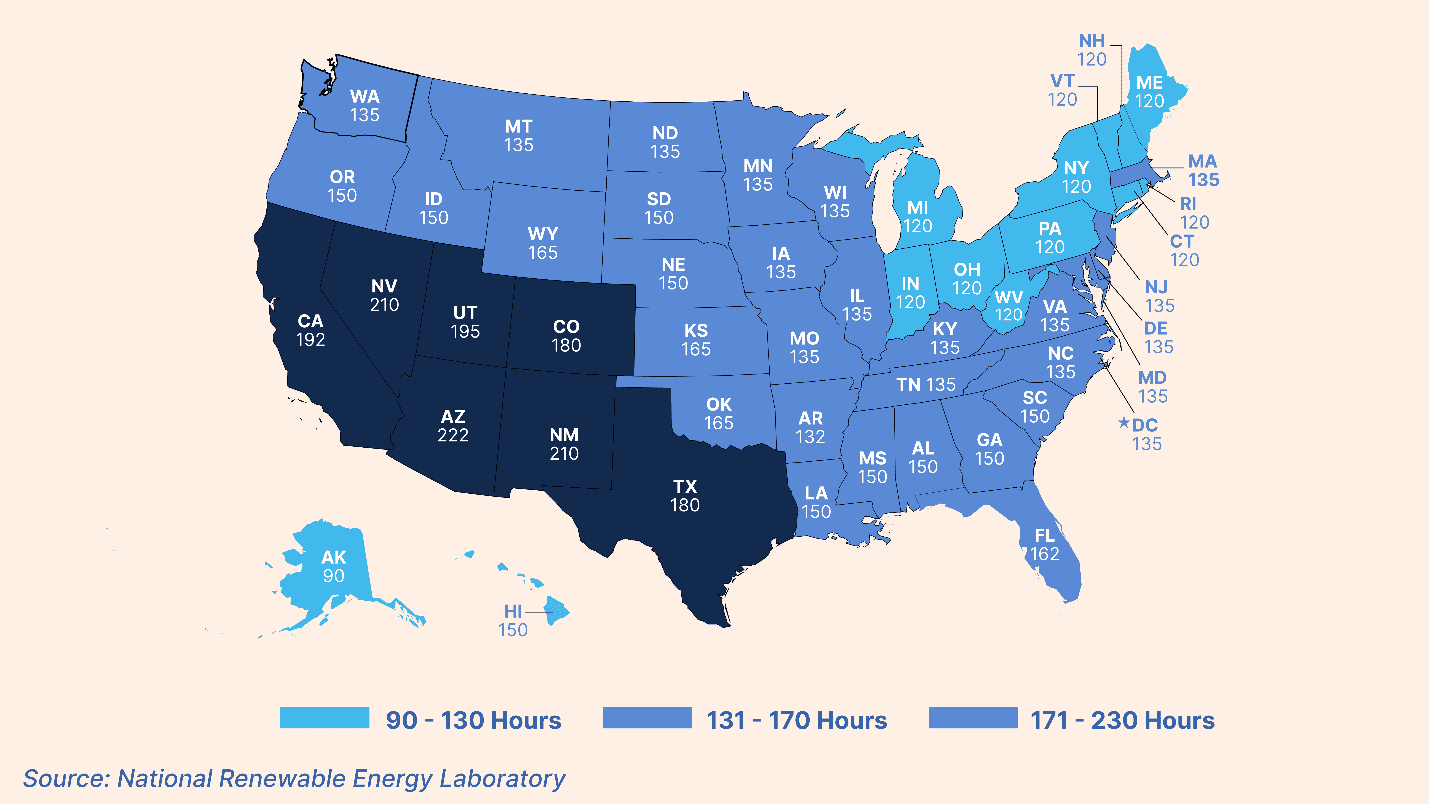
Look closely at the image above. It shows average annual sunlight hours across the United States. Washington falls squarely within the same general range as large portions of the Midwest, Northeast, and parts of the Southeast. It is not dramatically different from much of the country.
That surprises people.
The common belief is that Washington is simply too cloudy for solar to make sense. The data tells a different story. While we are not Arizona, we are far from a solar-deficient region. Many states with similar annual sunlight levels have mature and financially successful residential solar markets.
How Much Sun Does Washington Actually Receive Annually?
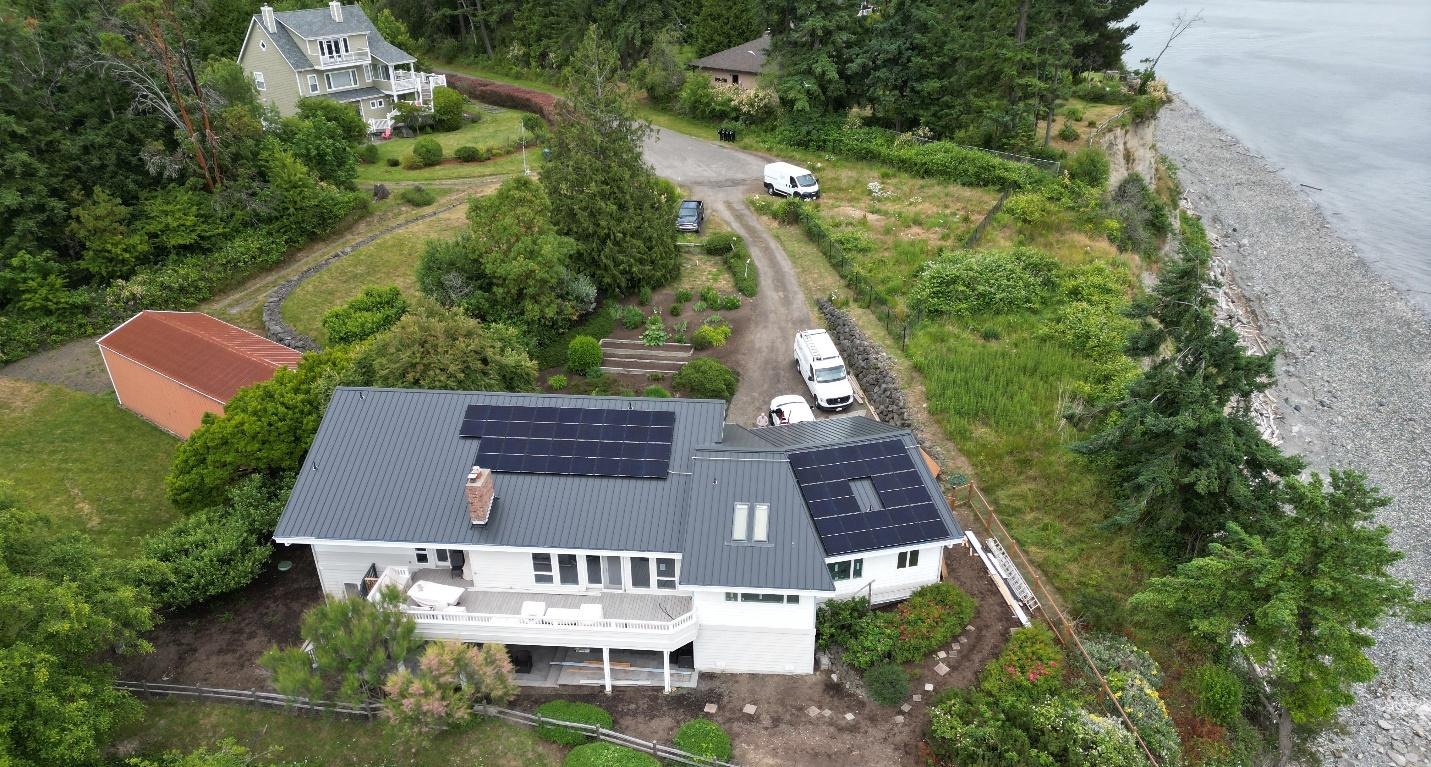
Washington receives enough annual solar irradiance to support strong residential production. In most of Western Washington, a properly oriented residential system will generate roughly 900 to 1,100 kilowatt-hours per installed kilowatt each year, depending on roof pitch, azimuth and shading. In sunnier parts of Eastern Washington, that number can climb closer to 1,200 to 1,400 kilowatt-hours per installed kilowatt annually.
For perspective, many established solar markets in the Midwest and Northeast operate within similar annual production ranges. What matters is not how many bright blue-sky days occur, but the total annual energy yield modeled using long-term weather data. When evaluated on annual kilowatt-hours per kilowatt performance, Washington clearly supports viable, predictable solar production.
Temperature Matters More Than People Realize
Sunshine is only part of the equation. Temperature plays a measurable role in panel efficiency.
As solar modules heat up, electrical resistance increases and output declines. In very hot climates, peak afternoon temperatures can reduce efficiency during the hours of strongest sun. Washington’s moderate climate allows panels to operate closer to their optimal temperature range for much of the year.
When comparing annual results across regions, it is not simply a question of sunny versus cloudy. Cooler operating conditions help balance Washington’s lower direct irradiance. That nuance is often missing from national comparisons.
Where Bifacial Panels Fit in the Pacific Northwest
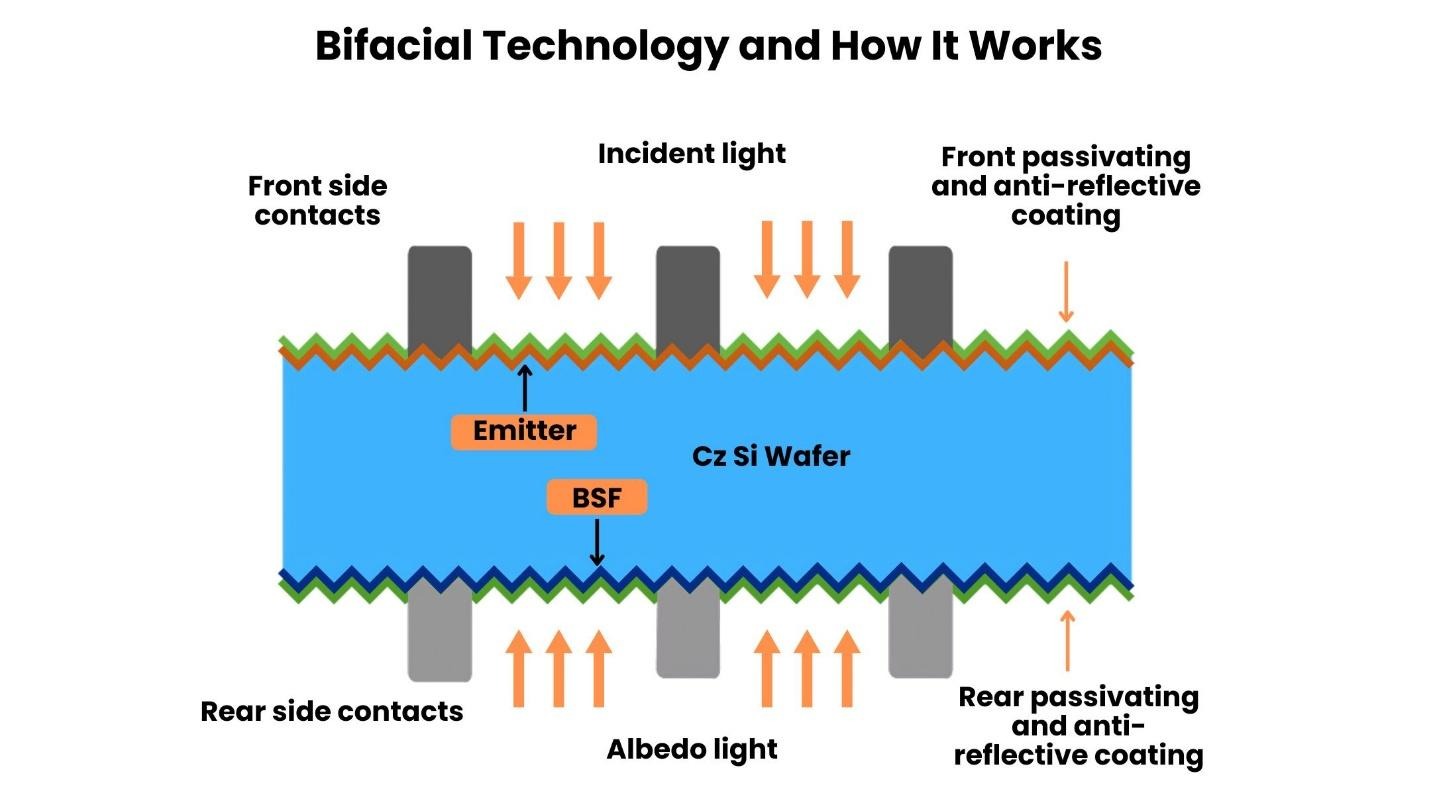
Bifacial solar panels generate electricity from both the front and rear surfaces of the module. Traditional panels rely on one side. Bifacial technology captures reflected and scattered light from surrounding surfaces, including roofing materials and ambient daylight.
In the Pacific Northwest, diffuse light is common. Cloud cover scatters sunlight across the sky rather than concentrating it into a single beam. Under the right installation conditions, bifacial panels can convert that scattered light into additional output.
Performance depends on details. Roof color, mounting height, tilt angle and surrounding surfaces all influence rear-side gain. A lighter roof surface or slightly elevated array can increase reflected light contribution. The improvement varies by property, but in variable sky conditions, bifacial modules can provide a measurable advantage.
For homeowners evaluating solar installers WA, this is where experience matters. Bifacial systems are not plug-and-play upgrades. They require thoughtful placement and modeling.
Roof Design and Shade Matter More Than Clouds
Cloud cover receives the most attention, yet roof orientation and shading typically influence production more than regional weather patterns.
A south or southwest facing roof with minimal shade will outperform a shaded roof in almost any state. Trees, chimneys, roof pitch and structural limitations often have a greater impact on annual output than Washington’s typical cloud frequency.
Modern design software uses historical weather data and property-specific measurements. Shade is evaluated hour by hour across the year. The result is a conservative annual generation estimate grounded in real data. When solar is assessed this way, the conversation becomes a mathematical decision.
The Financial Perspective in Puget Sound
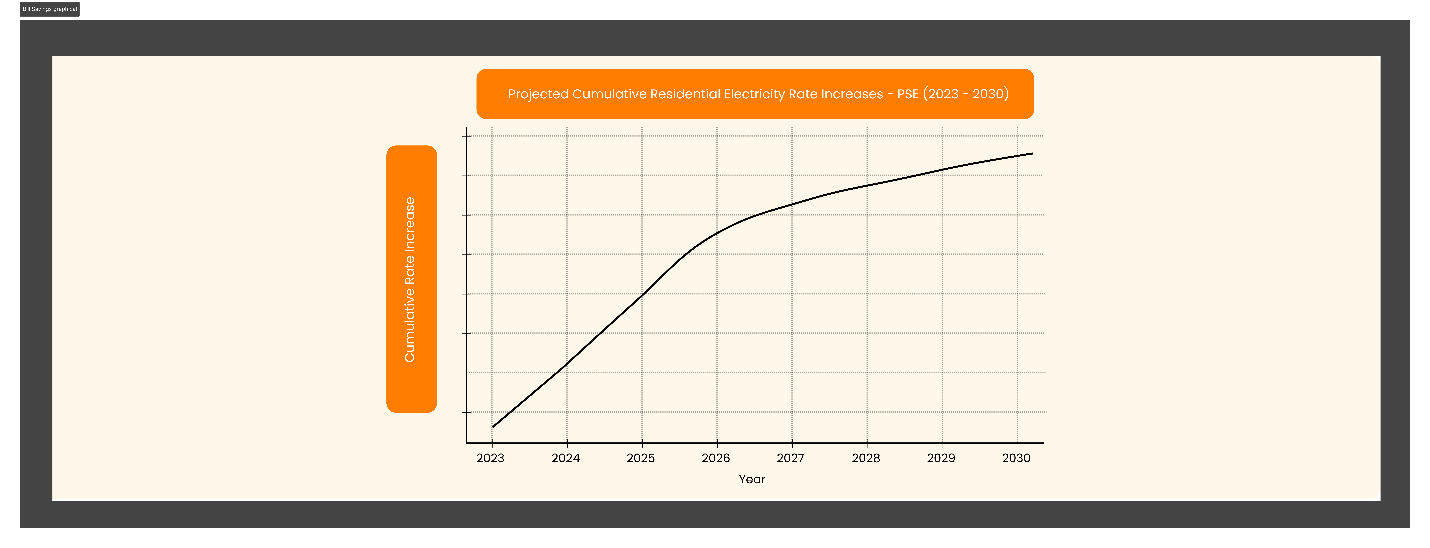
Electric rates in Washington are moving in one direction. Utilities are investing heavily in grid hardening, wildfire mitigation, transmission upgrades and new infrastructure to support electric vehicles, heat pumps and expanding data center demand. For homeowners in Puget Sound, the trend is visible on every bill. The cost of electricity is climbing and planning for higher rates is prudent.
Solar changes that equation. Each kilowatt hour produced on your roof is one less purchased at retail rates. When rates rise, the value of that offset rises with them. The goal is simple: to spend less on electricity.
There is also timing to consider. Washington’s current net metering structure allows homeowners to receive full retail credit for excess energy sent back to the grid. That credit has real financial weight, especially in a region where summer production can offset winter usage. State law caps the total participation in this program, and once utilities reach that threshold, compensation is expected to shift to a lower structure. Homeowners who install before that transition are grandfathered under the existing terms. Waiting means accepting a less favorable framework. So today’s net metering rules make solar more valuable now than it will be once the program phases into its next version.
Solar and the Electrified Home
Heat pumps shift both heating and cooling to electricity. Electric vehicles add charging demand. Induction cooking increases electrical reliance. As electrification expands, so does household consumption.
Solar becomes part of a broader strategy to stabilize utility costs. On-site generation offsets rising utility purchases. Over time, that hedge against rate increases can be significant.
Solar in Washington is about predictably offsetting a meaningful share of household demand in a climate that supports steady annual output.
So Is Solar Worth It in Washington?

Washington receives enough annual sunlight to support predictable residential solar production. The decision comes down to proper design, accurate modeling, and installation quality that will hold up now and twenty years from now.
- Detailed shade analysis
- Property-specific production modeling
- Clear discussion of panel selection, including bifacial where appropriate
- Transparent financial projections based on local utility rates
Answers to Common Questions Washington Homeowners Ask About Solar
Is solar worth it in Washington’s cloudy climate?
Yes. Washington receives enough annual daylight to support strong residential solar production. Panels generate electricity from daylight, not only direct sun, so they continue producing energy under overcast skies. Long summer days help balance lower winter output, making annual generation strong when systems are properly sized.
Do solar panels work on cloudy days?
They do. Cloud cover reduces peak output but does not stop production. Modern systems are designed to capture diffuse light, which is common in Western Washington and annual performance is based on total daylight across the year rather than bright midday sun alone.
Does cooler weather improve solar performance?
Yes. Solar panels operate more efficiently in moderate temperatures. Excessive heat can reduce output, so Washington’s cooler climate helps panels run closer to their optimal efficiency range for much of the year.
How does Washington’s net metering program affect solar value?
Washington currently offers retail net metering, which credits excess energy sent to the grid at the full retail rate. That structure increases financial return, especially when summer production offsets winter usage. Participation is capped by law, and future compensation is expected to be lower once thresholds are reached.
What should homeowners in Washington look for when comparing solar installers?
Homeowners should look for site-specific shade analysis, production modeling based on local weather data, and clear financial projections tied to current utility rates and net metering rules.


