

It might not look it, but it’s time—time to start thinking about what foods you want to grow in the garden this year. It’s very exciting. Growing your own food can be richly rewarding, in all kinds of ways. It can also be stressful and aggravating if you don’t know what you’re doing, though, so let’s start off on the right foot by learning how to start seeds indoors.
Pros and Cons of Starting from Seed
Should you even start your plants from seed? Maybe. There are some pros and cons.
First, the pros. If you’re planning to grow a large garden, buying seeds will be more cost-effective than purchasing young plants. Growing your own seeds gives you greater choice in terms of the varieties that are available. It also gives you more control over the way the seeds were started. That can be a huge bonus if you have some skill at gardening, or if you want to grow organic.
Then, the cons. Seeds, obviously, take longer to grow. There’s a lot more room for user error. Even without user error, there are more opportunities for them to die. Some plants are simply harder to grow from seeds. Plants like hot peppers can be tricky even for experienced gardeners who know how to start seeds. Buying seedlings or young plants could be a more encouraging way to dip your toe into the world of gardening.
Choose Your Plants
Not all plants are good candidates for indoor sowing. Some plants, like melons, squash, carrots and beets, hate to be transplanted and should be started outdoors in the spring. Others, however, thrive in the warm, protected environment of the great indoors.
Plants that are slow to grow, like broccoli, cabbage and brussels sprouts, should be started inside. If you live in an area with a shorter growing season and you want to eat slow-growing veggies at the end of it, starting seeds indoors is the simplest way to accomplish that.
Other plants need more protection from the elements while they’re young. Eggplants, tomatoes and peppers, for example, have a much better chance of survival when started inside. Do some research on the kinds of plants you want to grow to get a sense of what they prefer.
Plan Your Timetable
Once you know what plants you’re going to start, look up your local frost date. Then work backwards and figure out when each variety needs to be sown. A general rule is to start seeds 6 weeks before the last frost date, but some veggies only need 4 and others, like celery, can take 10 to 12.
The timetable is important because if you start too late, your harvest might be affected. If you start too early, though, your plants could outgrow their containers and need an additional transplant before they go outside. That’s extra stress on your plants, and can make it harder for them to adapt when you do put them outside.
Gather Your Supplies
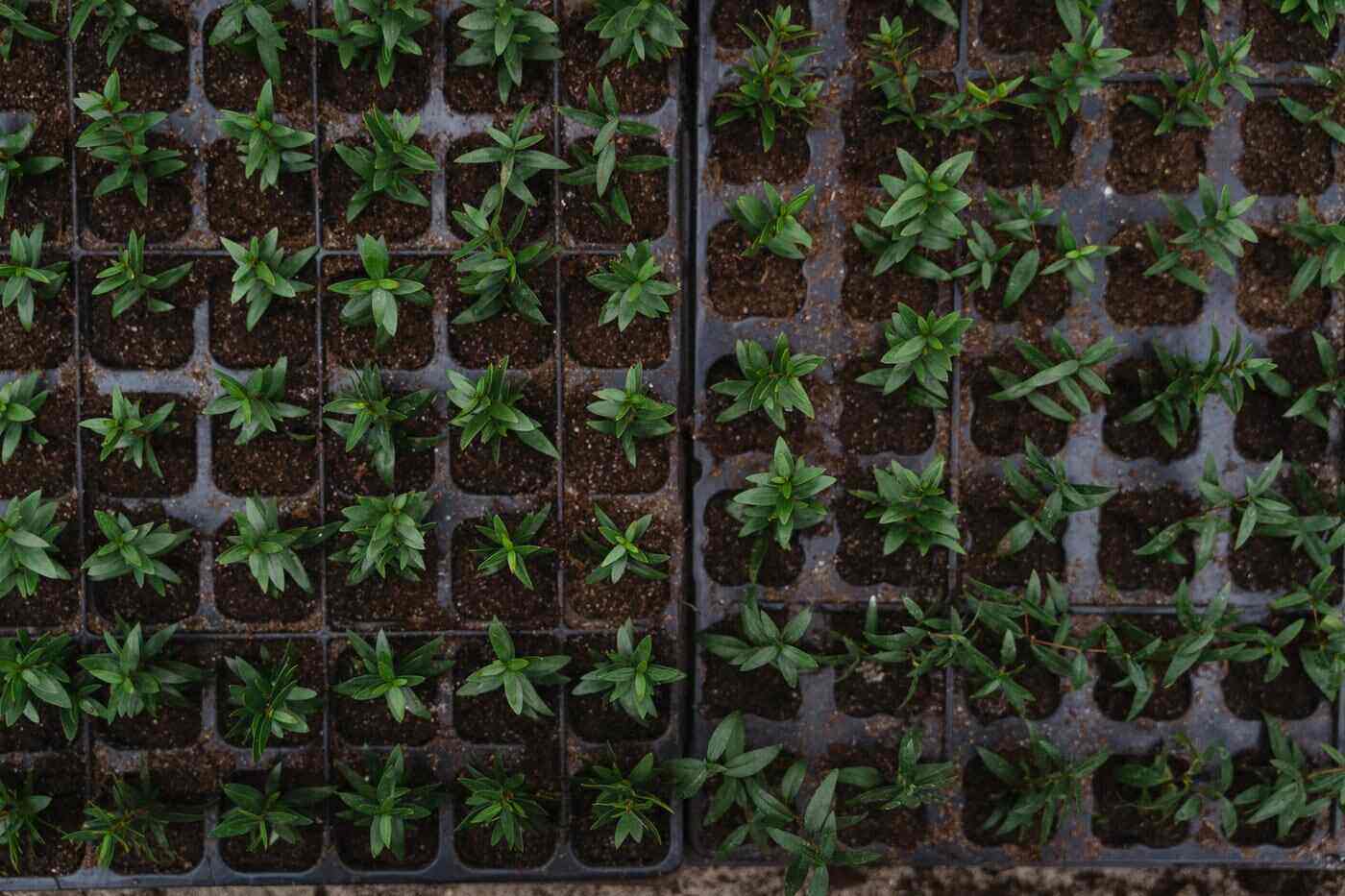
You’ll need some basic supplies to get you started, and some optional supplies depending on your growing conditions.
You’ll definitely need a quality seed starting medium and some containers. For soil, find a seed starter or a specialized potting mix. Regular soil will be too dense for tiny roots to penetrate.
You can buy seedling flats from a nursery, but you really don’t need anything fancy. You can use egg cartons or cleaned plastic food containers. Seed starting is an excellent way to repurpose disposables like take-out containers, yogurt cups or other plastics. Just poke holes in the bottoms to ensure they’ll drain.
If your growing space doesn’t get a lot of light, or if your home is on the chilly side, you might want to consider a few extra supplies. A grow light can give your crop some extra warmth and light if need be. If you’re starting your seeds in a very cold spot, or if you’re growing heat-loving plants, a heating mat can keep the soil at ideal temperatures for germination. If you do purchase a heating mat, it’s good to pair it with a soil probe thermometer so you can monitor the temperature.
Follow the Directions
Planting seeds can be a little more involved than just tossing them into some soil. Some seeds need to be soaked, refrigerated or even scored before planting. Read the directions on the packet to find out if there are any special instructions. It should have detailed guidance on how to start seeds of that particular variety.
Plant Your Seeds!
Fill your containers or flats with your soil. Make indentations in the soil at the distances and depths recommended on the packet. Gently press the seed into the indentation. Tiny seeds, like arugula, can be planted a few per indentation. Larger seeds should be sown on their own. Cover with soil.
Water the containers with a watering can or something that will distribute water lightly and evenly. You’ll be regularly watering your containers to keep the soil moist and you’ll want a watering system that’s not so forceful that it dislodges new roots.
And now for the most important step: label the containers with the plant’s name and also the date. This is crucial—you will not remember what you planted and you will not be able to tell by looking at the seedlings. You will think you will be able to, but you won’t.
Cover the containers with a plastic dome, loose plastic wrap or other clear covering. Poke holes in your covering if necessary—they need ventilation. Once the seedlings start poking through the surface, it’s time to remove the covering.
Ongoing Care
You can keep your planted containers anywhere you have space, provided the temperature is around 65 to 75°F. Sunlight isn’t a necessity, and some plants even need darkness to germinate. When the seedlings appear, move them to a bright window or under a grow light. If you’re using a grow light, follow the manufacturer’s guidelines regarding placement.
Seedlings generally need 6-8 hours of sunlight per day, but watch them for signs of wilting or damage. Some might need to be protected if the light is too strong. Rotate the containers for even plant growth.
And now future you has seedlings! You’re ahead of the game and well on your way to enjoying delicious food straight from your garden. Great job, future you.
Feature image: Francesco Gallarotti; Image 1: Tima Miroshnichenko


