

If you’re someone who would like to live an eco-friendly life, then growing your own produce at home is a great way to start. With that being said, if you live in a cool climate or in an area that has a lot of inclement weather, growing your own produce can be difficult. However, this is where a greenhouse comes into play. Yeah, you can always buy a greenhouse kit, but that’s not as fun as building your own. Today we’re going to look at how to build a DIY plexiglass greenhouse.
The Benefits of a DIY Plexiglass Greenhouse
Before we talk about how to build a plexiglass greenhouse, let’s quickly talk about some of the main benefits that you get from doing so.
Cost-Effectiveness
If you find the right plexiglass greenhouse panels and other materials, you can save a whole lot of money building your own. A plexiglass greenhouse will cost you less either way, with labour costs making a huge difference.
Overall Durability
A benefit from using plexiglass is that it’s durable. It features excellent impact resistance, allowing for a secure and stable structure.
A Custom Design
When building your own greenhouse you get to build it whatever way you want. You can build it to the shape, size and specifications as you see fit.
Light Transmission
The other benefit to consider when building your own greenhouse is that plexiglass features great light transmission, which is of course important for growing plants.
Materials Needed to Build a DIY Plexiglass Greenhouse
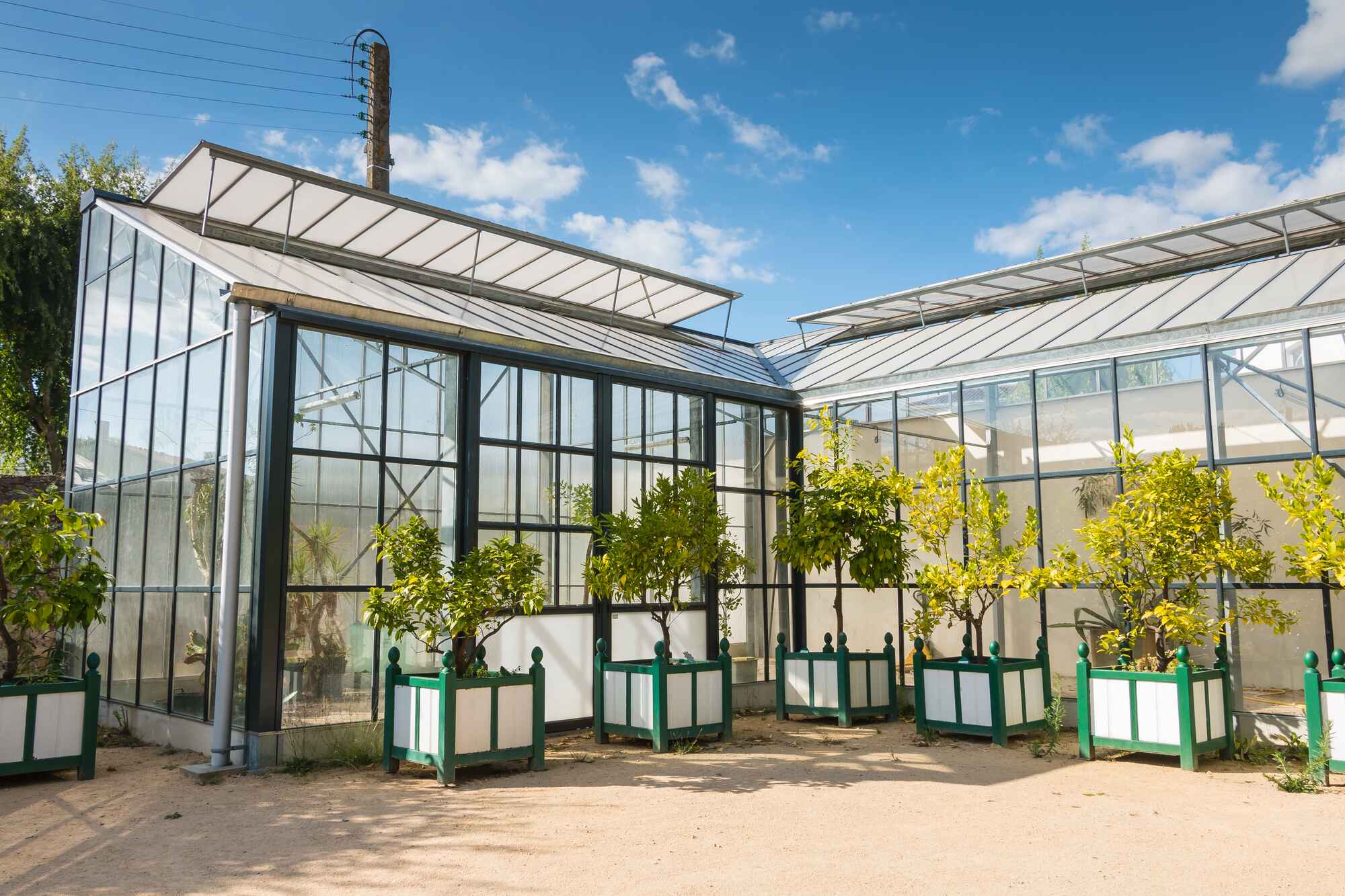
There are a number of tools and materials you’ll need to build your own DIY plexiglass greenhouse, so let’s take a look.
- Plexiglass sheets for greenhouse use
- Framing material, either 2 by 4 lumber or metal tubing
- Foundation material, which could be treated wood, gravel or concrete
- Door hardware and hinges
- Acrylic or silicone sealant
- Bolts, nails or screws
- Fastening brackets or clips for plexiglass
- Level
- Measuring tape
- Metal cutting saw or circular saw for wood
- Power drill and screwdrivers
- A caulking gun
- Goggles, gloves and ear protection
How to Build a DIY Plexiglass Greenhouse: Step-by-Step
Step 1: Choose the Right Location
The first step in building your own greenhouse is to select the right location, which will highly impact your success with growing. Ideally, a greenhouse should be located in an area where it gets a maximum amount of sunlight all day long, which is especially the case during the winter when there’s less daylight.
You want to have the longest side of your greenhouse facing south as this will help capture the most sunlight. You also want to consider potential shading from trees, buildings and other structures, as well as your local climate. Choose a spot where the ground is level to make sure your structure is stable.
You’ll also want to ensure there’s plenty of natural drainage at the chosen location to make sure water doesn’t pool around the foundation, therefore preventing structural damage and pests from invading your greenhouse.
Step 2: Choosing a Design
The next step in the process is to choose a design for your greenhouse. More than anything else, this means choosing how large your greenhouse will be. If you’re just starting out and you’re a home hobbyist, going for a small greenhouse around 10 by 12 feet is more than enough.
With that being said, you can choose any size you see fit. Just make sure that you have enough space to fit all of the plants you want without being overwhelmed. Remember, larger greenhouses can support more plant life, but also require more maintenance and operation costs.
You also want to consider the type of greenhouse you want to build, with freestanding greenhouses being quite popular, although they require more maintenance and materials than a lean-to.
A lean-to greenhouse is one that you attach to an existing building. The added benefit here is that the shared wall provides additional structural support and insulation.
During this process, you should also plan for ventilation, as this is essential for maintaining proper humidity and temperature levels. You need to plan for windows, fans, or vents that can be closed and opened to regulate the environment inside of the greenhouse. Furthermore, where you place the door should make it easy for you to get inside of the greenhouse while aligning with prevailing winds.

Step 3: Create a Blueprint
We recommend sketching out a blueprint before you get started as it helps you visualize what the final structure will look like and it also helps make your material estimation more accurate.
When you create a blueprint, you should include the dimensions of the greenhouse, the placement of vents, windows, doors and where your structural supports will go. Irrigation systems, lighting and shelving should also be clearly marked on your blueprints.
Step 4: Preparing the Foundation
With your design chosen, the next step is to build the foundation. If you expect your greenhouse to last, it needs to have a good foundation.
Start by clearing the site of all debris, obstructions and vegetation to prepare the ground for the greenhouse. Doing this will also help prevent weeds and pests from getting into the greenhouse later on down the line. If the area you’ve chosen has a bit of a slope, you might want to level it.
Now it’s time for you to actually build the foundation. We recommend going for a fairly basic option. This could mean using simple concrete blocks or treated wood. This allows for a cost effective and straightforward way to create a secure foundation.
However, if you want a more permanent and durable solution, pouring a concrete slab is recommended. Note that concrete is a highly polluting building material, however, there are low-carbon concrete alternatives available that you can use that replace some of the cement with recycled materials. If you’re going to do this, you’ll have to excavate down to eight inches, lay down compacted gravel and then pour the concrete foundation.
If you’re using a concrete slab, make sure that it extends just beyond the greenhouse to provide maximum stability and to stop water from getting into your greenhouse. Once you’ve done that, you’ll want to use a level to make sure that the greenhouse foundation is level and flat. You’ll need to make adjustments if it’s not level.
Step 5: Build the Frame
You now need to build the frame. Of course, you first need to choose between metal and wood. Wood is a good choice to consider if you need good insulation properties and something that is easy to build with. Wood also tends to look much better than metal.
That being said, wood requires a lot of maintenance as it rots easily. On the other hand, something like a galvanized steel or aluminum metal frame is more durable and requires less maintenance. Metal is also ideal for wetter climates. Metal frames tend to support heavy loads much better than wood as well, making them ideal for areas that get a lot of snow or rain.
Wood is the more sustainable option, however, metal is often recycled so if you get recycled metal that’s also a good choice, particularly since it will last a lot longer than wood.
Once you’ve selected the frame material, measure and cut the pieces according to the blueprint you created in the previous steps. Make sure you create the base frame first, as this will be the foundation for the roof and walls.
Using necessary materials, assemble the base frame on top of the foundation. Make sure that the corners are square and that the frame is level. You’ll want to use screws or bolts to secure the wood together, or if using metal, weld the pieces together.
You can now create the roof frame. If you’re making a gable roof, cut the rafters to the right length, and create angles at the ends so they meet the ridge beam and form a peak. Remember that the pitch of the roof is crucial as it allows water and snow to run off. Generally speaking, an angle of between 30° and 45° should be enough. Using necessary materials, secure the ridge beams and the tops of the uprights to the rafters.
To make sure your greenhouse is solid, use some horizontal bracing between the roof rafters and the uprights. This will help prevent lateral movement and help make the structure more stable. This is especially important if you live in an area that is prone to strong winds.
Step 6: Install the Plexiglass Panels
Measure the frame where you’ll be putting the plexiglass so you can see how large your panels need to be. You’re now going to use a fine tooth blade on a circular saw or a jigsaw that is meant to cut plexiglass, and make your cuts as needed.
Start with the roof panels to ensure that the structure stays dry and clean during installation. Put the plexiglass sheets over the frame and leave about a 1/16th inch of a gap between the panels to allow for contraction and expansion.
You’ll need to use either specialized clips for acrylic sheets or plexiglass screws to secure the panels to the frame. You’ll first want to create pilot holes with a drill, as this will prevent the plexiglass from splitting. Make sure to attach the plexiglass panels securely, but don’t over tighten them.
To make sure no water leaks into your greenhouse, you’ll want to apply a bead of acrylic sealant or silicone along all edges of the plexiglass where it meets the frame. Make sure that the sealant is totally cured before moving on. Once it’s cured, you can install the wall panels. You can use the same methods as you use for the roof.
Step 7: Doors and Windows
Now you can create a door frame for your greenhouse wall. Remember that the door frame should be just a bit smaller than the opening, as this will allow the door to easily move.
Using durable hinges, attach the door frame and then install a locking or latching mechanism. If installing windows, now is the time to do that as well.
Step 8: Apply the Finishing Touches
Now you can apply some finishing touches, with ventilation being a main consideration. You’ll want to install some additional exhaust fans to create better airflow. This is especially important for larger greenhouses.
You can now also set up the interior of your greenhouse by installing hanging systems, benches, and shelves. You want to consider the spacing and height of the shelves so you can accommodate plants of different sizes and lighting requirements.
You may also want to install something like a drip irrigation system to keep the soil at constant moisture levels, along with some supplemental lighting.

Frequently Asked Questions
Before we call it a day, let’s go over some of your most frequently asked questions about building a plexiglass greenhouse.
How thick does plexiglass need to be for a greenhouse?
Plexiglass for greenhouses is usually between 3mm and 6mm in thickness.
How much plexiglass is needed to build a greenhouse?
Exactly how much plexiglass you’ll need to create your greenhouse depends on the size of the greenhouse that you are building. You’ll want to sum up the area of the roof and the walls to determine how much plexiglass you’ll need.
How to make a window out of plexiglass in a greenhouse?
All you have to do is cut the plexiglass to the right window size, create a frame for it and then use hinges or sliding tracks.
How to waterproof plexiglass for greenhouse windows?
Use silicone caulk or any other kind of waterproof sealant around the plexiglass edges where it meets the frame.
How to build a wood frame plexiglass greenhouse?
To build a wooden frame greenhouse, use lumber to create a frame, and then secure the plexiglass to that using bolts or screws.
How to clean greenhouse plexiglass?
All you need to clean plexiglass is water and some mild soap. Be sure to avoid any abrasive cleaners or tools.
How to maintain a plexiglass greenhouse?
To maintain your plexiglass greenhouse, make sure to clean the panels on a regular basis. You’ll also want to regularly inspect the panels, the frame, and the seals for any signs of damage. You’ll want to repair any issues as quickly as you can.
Images from Depositphotos.com


